






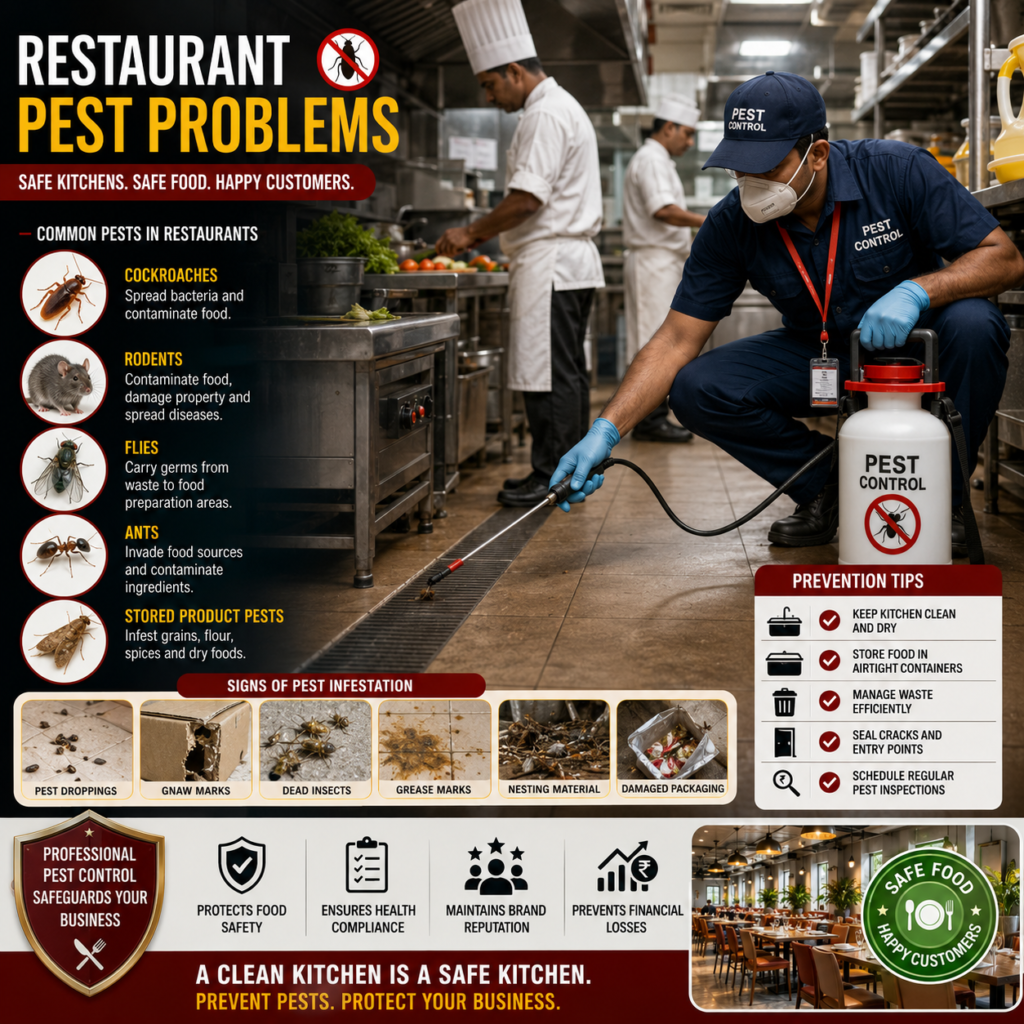
Restaurant Pest Problems in Kolkata: Common Issues and Prevention Tips
Running a restaurant or commercial kitchen requires strict attention to hygiene, food safety, and customer satisfaction. However, one challenge that many food establishments face is Restaurant Pest Problems. Kolkata’s humid climate, dense urban environment, and continuous food handling activities create ideal conditions for pests to thrive.
Whether it is a small café, cloud kitchen, restaurant, hotel kitchen, or food processing unit, pest infestations can lead to health hazards, regulatory penalties, and reputational damage. Understanding the common pest threats and implementing effective prevention measures is essential for maintaining a safe food environment.
Why Restaurant Pest Problems Are Common in Kolkata
Kolkata experiences high humidity and prolonged monsoon seasons, making commercial kitchens vulnerable to pest activity. Food scraps, moisture, storage areas, and waste disposal zones often attract unwanted pests.
Common factors contributing to infestations include:
- Poor waste management
- Food residue accumulation
- Damp and dark storage areas
- Cracks and gaps in walls
- Improper food storage practices
- Inadequate cleaning schedules
These conditions create the perfect breeding ground for various pests that can compromise food safety standards.
Common Pest Problems Found in Restaurants and Commercial Kitchens
1. Cockroach Infestations
Cockroaches are among the most frequent causes of Restaurant Pest Problems. They are attracted to food particles, grease deposits, and moist environments.
Common hiding spots include:
- Kitchen drains
- Storage rooms
- Under sinks
- Behind refrigerators and cooking equipment
- False ceilings and wall cracks
Cockroaches are among the most frequent causes of Restaurant Pest Problems. They are attracted to food particles, grease deposits, and moist environments. Restaurant owners should pay close attention to early warning signs because a cockroach infestation in kitchens can quickly spread bacteria, contaminate food preparation surfaces, and lead to serious hygiene concerns.
Cockroaches can contaminate food preparation surfaces and spread bacteria, making immediate intervention necessary.
2. Rodent Activity
Rats and mice pose serious risks to food businesses. They can:
- Damage packaging materials
- Contaminate stored food
- Chew electrical wiring
- Spread disease-causing pathogens
Rodents often enter through small openings and thrive in storage areas where food supplies are readily available.
3. Flies and Flying Insects
Flies are attracted to food waste, open garbage bins, and moist organic matter. They can easily transfer contaminants from waste areas to food preparation zones.
Common types include:
- House flies
- Fruit flies
- Drain flies
A high presence of flies often indicates sanitation issues that require immediate attention.
4. Ant Infestations
Ants are persistent pests that invade kitchens in search of food and water. Sugar, crumbs, and improperly sealed food containers can quickly attract ant colonies.
Although small in size, ants can contaminate food products and create operational challenges.
5. Stored Product Pests
Restaurants that store grains, flour, spices, and dry ingredients may encounter:
- Beetles
- Weevils
- Moths
These pests infest stored food products and can cause significant inventory losses if not detected early.
Signs of Pest Infestation in Restaurants
Recognizing early warning signs can prevent a minor issue from becoming a major infestation.
Some common Signs of pest infestation in restaurants include:
- Pest droppings near food storage areas
- Unusual odors in kitchen spaces
- Gnaw marks on packaging
- Damaged food containers
- Grease marks along walls
- Nesting materials in hidden areas
- Increased pest sightings during operating hours
- Dead insects near windows or equipment
Routine inspections are essential to identify these signs before they impact food safety compliance.
Impact of Pest Infestations on Food Businesses
Health and Safety Risks
Pests can spread harmful microorganisms that contaminate food products and preparation surfaces. This increases the risk of foodborne illnesses among customers.
Regulatory Compliance Issues
Health inspections often focus heavily on sanitation and pest management practices. A pest infestation can result in warnings, penalties, or even temporary closure.
Reputation Damage
In today’s digital world, a single customer photograph or online review showing pests can significantly damage a restaurant’s reputation.
Financial Losses
Infestations can lead to:
- Food wastage
- Product contamination
- Repair expenses
- Lost customers
- Reduced revenue
These factors make proactive pest control an essential investment rather than an optional expense.
Importance of Pest Management in Food Businesses
Effective Pest management in food businesses goes beyond simply eliminating visible pests. It involves identifying risk factors, monitoring pest activity, and implementing long-term preventive measures.
A professional pest management strategy typically includes:
- Site inspections
- Risk assessment
- Monitoring systems
- Targeted treatments
- Preventive recommendations
- Scheduled maintenance visits
This proactive approach helps businesses maintain hygiene standards and operational continuity.
Pest Prevention in Restaurants: Best Practices
Maintain Strict Cleaning Protocols
Daily cleaning should cover:
- Floors and drains
- Food preparation surfaces
- Storage shelves
- Waste disposal areas
- Kitchen equipment
Even small food residues can attract pests.
Store Food Properly
Ensure all food items are:
- Sealed in airtight containers
- Stored off the floor
- Regularly inspected for contamination
Manage Waste Efficiently
Garbage should be:
- Removed frequently
- Stored in covered bins
- Kept away from food preparation zones
Seal Entry Points
Inspect the premises regularly for:
- Wall cracks
- Gaps around pipes
- Damaged doors
- Broken window screens
Preventing pest entry is a critical component of Pest prevention in restaurants.
Conduct Regular Inspections
Routine inspections help identify potential infestations before they become severe.
Why Professional Pest Control Matters
While basic preventive measures are important, professional services provide a higher level of protection. Many food establishments rely on Pest control services in Kolkata to maintain compliance, eliminate hidden infestations, and reduce future pest risks in commercial kitchens.
Professional technicians can:
- Identify hidden pest activity
- Apply targeted treatments
- Recommend preventive improvements
- Monitor pest trends over time
Businesses seeking comprehensive solutions often invest in Commercial pest control Kolkata programs designed specifically for restaurants, hotels, and food preparation facilities.
For establishments looking for professional support, reliable pest control services can help create safer and healthier kitchen environments while ensuring regulatory compliance.
Growing Demand for Commercial Pest Management
The global pest control industry continues to expand as businesses prioritize hygiene and safety. According to a recent pest control market report, increasing awareness of health risks, stricter food safety regulations, and growing demand for preventive solutions are driving significant growth in the industry.
This trend highlights the importance of investing in preventive measures before infestations impact business operations.
Restaurant owners cannot afford to ignore Restaurant Pest Problems. From cockroaches and rodents to flies and stored-product pests, infestations can affect food safety, customer trust, and business profitability.
Implementing proper sanitation practices, regular inspections, and effective Pest management in food businesses can significantly reduce risks. Combined with professional Pest control services in Kolkata and Commercial pest control Kolkata, restaurants can create a cleaner, safer, and more compliant environment for both staff and customers.
By prioritizing Pest prevention in restaurants, food businesses can protect their reputation, maintain operational efficiency, and ensure a positive dining experience for every customer.
FAQs
1. What are the most common Restaurant Pest Problems in Kolkata?
Cockroaches, rodents, flies, ants, and stored-product pests are among the most common pest issues affecting restaurants and commercial kitchens in Kolkata.
2. Why are commercial kitchens more vulnerable to pest infestations?
Commercial kitchens provide food, water, warmth, and shelter, creating ideal conditions for pests to survive and reproduce.
3. How often should restaurants schedule pest control services?
Most experts recommend monthly or quarterly inspections depending on the size of the establishment and its risk level.
4. What are the early Signs of pest infestation in restaurants?
Common signs include droppings, foul odors, damaged packaging, grease marks, nesting materials, and visible pest activity.
5. How does Pest management in food businesses improve compliance?
A structured pest management program helps maintain sanitation standards, reduce contamination risks, and meet health inspection requirements.
6. Can Pest prevention in restaurants reduce operational costs?
Yes. Preventive measures help avoid food wastage, property damage, emergency treatments, and revenue losses caused by infestations.
7. Are professional Pest control services in Kolkata necessary for restaurants?
Yes. Professional services provide expert inspections, targeted treatments, and long-term monitoring that are difficult to achieve through DIY methods alone.
8. What should restaurants look for in Commercial pest control Kolkata providers?
Look for experience in food industry environments, customized treatment plans, regular monitoring, compliance support, and preventive maintenance programs.