



Maintaining a clean and organised workplace is essential for every business. Whether it is a corporate office, retail store, warehouse, educational institution or commercial building, regular housekeeping helps create a hygienic and professional environment. However, managing cleaning staff, arranging equipment and maintaining consistent cleaning standards can become challenging for businesses.
This is where contract housekeeping services become useful. Instead of managing every cleaning activity independently, businesses can appoint a professional service provider to handle housekeeping according to an agreed schedule and scope of work.
But what exactly does a contract housekeeping service include? Let’s explore its major components and understand how it can benefit businesses.
What Is a Contract Housekeeping Service?
Contract housekeeping is an arrangement where a business hires an external service provider to manage cleaning and housekeeping activities for a specific period under agreed terms and conditions.
The service provider is responsible for carrying out the assigned cleaning activities based on the property’s requirements, cleaning frequency and agreed service scope.
Depending on the agreement, services may include daily cleaning, washroom maintenance, floor care, waste management, pantry cleaning and periodic deep cleaning.
Contract housekeeping is commonly used by corporate offices, shopping complexes, hotels, hospitals, educational institutions, warehouses and other commercial properties.
What Does a Contract Housekeeping Service Include?
A professional housekeeping contract can cover several cleaning and maintenance activities. The exact services depend on the size of the property, business requirements and agreement between the client and service provider.
1. Daily Office and Commercial Space Cleaning
Routine cleaning is one of the most important parts of contract housekeeping.
It helps maintain cleanliness throughout the working day and prevents dust, dirt and waste from accumulating.
Typical activities include:
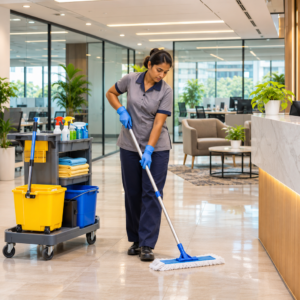
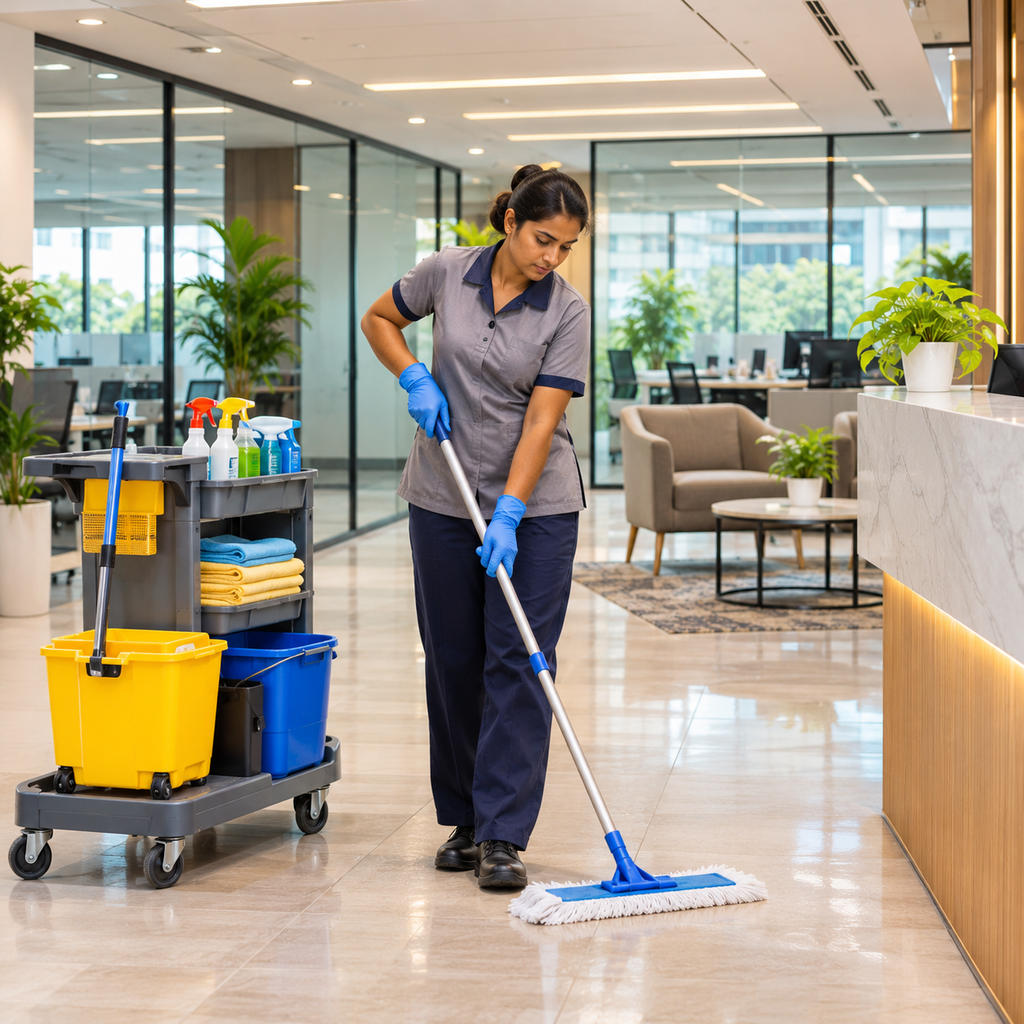
- Sweeping, vacuuming and mopping floors.
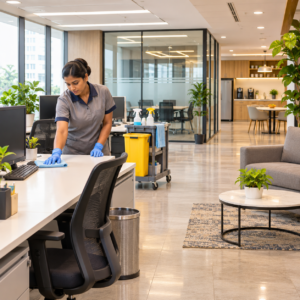
- Dusting desks, furniture and accessible surfaces.
- Cleaning reception areas and waiting spaces.
- Emptying dustbins and managing general waste.
- Cleaning meeting rooms and common areas.
- Maintaining corridors and entrance areas.
The cleaning frequency can be adjusted according to employee strength, visitor movement and daily business operations.
2. Washroom and Restroom Maintenance
Washrooms require regular cleaning because they are frequently used by employees, customers and visitors.
Housekeeping staff may handle toilet cleaning, washbasin cleaning, mirror cleaning, floor mopping, waste disposal and replenishment of basic hygiene supplies.
Regular inspection is also important to identify plumbing leaks, unpleasant odours, damaged fixtures and supply shortages.
3. Pantry and Kitchen Cleaning
Commercial offices often have shared pantry spaces where employees prepare beverages, store food and use kitchen appliances.
Contract housekeeping can include cleaning countertops, sinks, dining tables, cabinets, appliance exteriors and pantry floors.
Food waste should be removed regularly, and shared surfaces should be cleaned according to appropriate hygiene practices.
4. Floor Cleaning and Maintenance
Different commercial properties may have different flooring materials, including tiles, marble, granite, vinyl and carpets.
Housekeeping activities can include:
- Regular sweeping and mopping.
- Vacuuming carpets and rugs.
- Removing visible stains.
- Periodic machine scrubbing.
- Suitable floor polishing or maintenance.
The cleaning method should always match the flooring material to avoid scratches, discolouration or surface damage.
5. Waste Collection and Disposal
Proper waste management is another important component of housekeeping.
Cleaning staff can collect waste from workstations, pantry areas, washrooms and common spaces. Waste segregation may also be included according to the property’s requirements and applicable disposal procedures.
Businesses should establish clear arrangements for the collection and removal of different waste categories.
6. Dusting and High-Touch Surface Cleaning
Frequently touched surfaces can collect dirt throughout the day. These include door handles, lift buttons, handrails, reception counters, shared equipment and conference tables.
Contract housekeeping schedules can include routine cleaning of these surfaces using suitable cleaning products.
Accessible furniture, shelves, glass partitions and other fixtures may also be included in regular dusting activities.
7. Periodic Deep Cleaning
Apart from everyday housekeeping, commercial properties may require scheduled deep cleaning.
Depending on the contract, this can include:
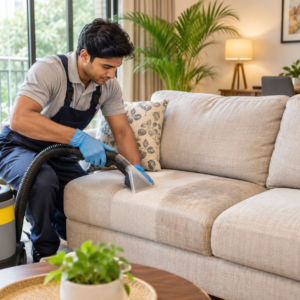
- Carpet and upholstery cleaning.
- Sofa and chair cleaning.
- Detailed washroom cleaning.
- Window and glass partition cleaning.
- Cleaning difficult-to-reach areas.
- Deep floor cleaning.
These activities may be scheduled weekly, monthly or at other agreed intervals depending on property usage.
Does Contract Housekeeping Include Cleaning Staff and Equipment?
Many businesses choose contract housekeeping because they want organised cleaning support without independently managing every operational detail.
Depending on the agreement, the service provider may arrange housekeeping personnel, assign supervisors, provide cleaning equipment and coordinate cleaning schedules.
However, businesses should confirm the following before signing a contract:
Staff deployment: Number of housekeeping personnel, working hours, shift arrangements and replacement procedures.
Cleaning equipment: Availability of mops, vacuum cleaners, floor-cleaning machines, buckets and other necessary equipment.
Cleaning materials: Whether detergents, disinfectants, garbage bags and other consumables are included in the service price.
Supervision: Who will monitor staff performance and ensure that assigned cleaning activities are completed?
Service reporting: Whether daily checklists, inspection reports and complaint records will be maintained.
These details should be clearly documented to avoid misunderstandings.
Benefits of Hiring Contract Housekeeping Services for Businesses
Contract housekeeping offers several advantages for commercial establishments.
1. Consistent Cleaning Schedule
A planned housekeeping arrangement ensures that important areas receive regular attention. Businesses can establish daily, weekly and monthly cleaning activities according to their operational requirements.
2. Reduced Administrative Work
Managing housekeeping staff independently involves recruitment, attendance monitoring, scheduling and supervision. Outsourcing these activities can reduce some of the administrative responsibilities of business management.
3. Better Workplace Hygiene
Regular cleaning of workstations, washrooms, pantry areas and common spaces helps maintain a hygienic environment for employees and visitors.
4. Flexible Service Requirements
Different businesses have different cleaning requirements. A small office may need limited daily cleaning, whereas a large commercial building may require multiple personnel and additional cleaning shifts.
An agreed contract can be structured around these operational requirements.
5. Professional Cleaning Management
A structured housekeeping arrangement can establish clear responsibilities, cleaning procedures and performance expectations.
This makes it easier to monitor service quality and address recurring cleaning problems.
How to Choose the Right Contract Housekeeping Service Provider?
Selecting the right housekeeping provider is important for maintaining consistent service quality.
Before finalising an agreement, consider these factors:
- Experience: Check whether the service provider has experience handling commercial properties similar to yours.
- Service scope: Confirm which areas and cleaning activities are included in the agreement.
- Staff management: Understand how personnel are deployed, supervised and replaced when necessary.
- Cleaning equipment: Check whether the required equipment and cleaning materials are available.
- Safety practices: Ensure that staff follow suitable cleaning procedures, use protective equipment and handle chemicals responsibly.
- Pricing and contract terms: Understand the service charges, payment schedule, additional costs and agreement duration.
- Quality monitoring: Look for clear inspection procedures and a system for handling complaints.
A detailed discussion before signing the contract can help businesses select a service arrangement that suits their requirements.
Get Commercial Housekeeping Support from Sera Facility Management
Maintaining a clean commercial property requires regular attention, proper planning and dependable housekeeping support. Contract housekeeping can help businesses organise cleaning activities, manage workplace hygiene and reduce the burden of handling everyday cleaning operations internally.
Sera Facility Management offers commercial housekeeping services in Kolkata, alongside other commercial facility solutions such as security guard services, payroll services, unskilled labour and peon services.
Businesses looking for housekeeping support can explore Sera Facility Management’s commercial services to learn more about its available services and enquire about a suitable arrangement.
Choosing the right housekeeping support can help create a cleaner, more organised and professional working environment.