






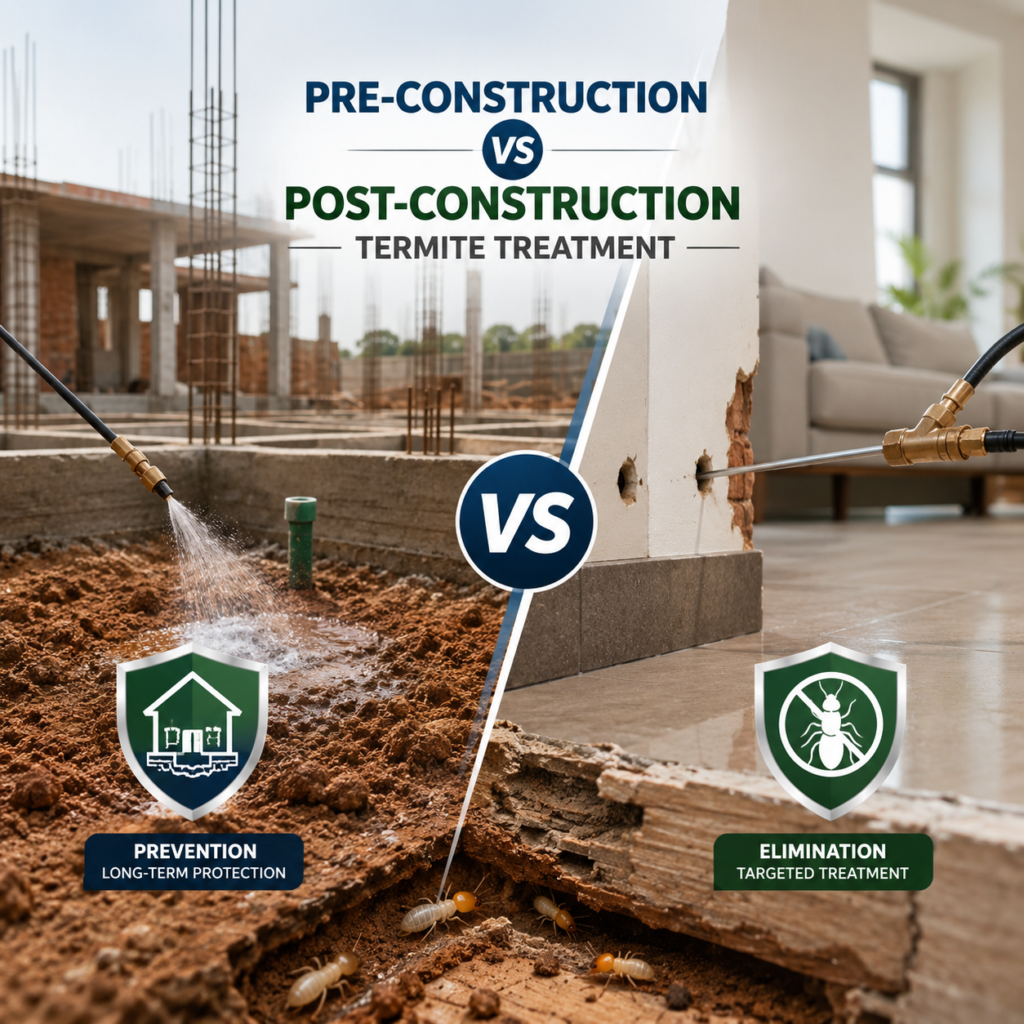
Pre-construction vs Post-construction Termite Treatment
Termites are among the most destructive pests that can silently damage wooden structures, furniture, doors, flooring, and even a building’s foundation. Understanding Pre-construction vs post-construction termite treatment is essential for homeowners, builders, and property managers looking to protect their investment for years to come.
Whether you are constructing a new property or dealing with an existing termite infestation, selecting the right treatment at the right stage can save significant repair costs. In this guide, we’ll compare both treatment methods, explain their advantages, and help you determine which option best suits your property.
What Is Pre-construction Termite Treatment?
Pre-construction termite treatment is performed before the building foundation and flooring are completed. During this stage, professionals apply specialized chemicals to the soil, creating a protective barrier that prevents termites from entering the structure.
This preventive solution is commonly recommended for:
- Residential homes
- Commercial buildings
- Apartments
- Industrial projects
- Educational institutions
Since the treatment is applied before construction is completed, it provides long-lasting protection beneath the structure.
What Is Post-construction Termite Treatment?
Unlike preventive treatment, post-construction termite treatment is carried out after a building has already been constructed. It is mainly used when termites are detected or when the property was never treated during construction.
Experts inject anti-termite chemicals into drilled holes around walls, floors, foundations, and other vulnerable areas to eliminate active termite colonies and prevent further infestation.
It is ideal for:
- Existing homes
- Renovated properties
- Offices
- Shops
- Buildings showing termite activity
Pre-construction vs Post-construction Termite Treatment: Key Differences
| Feature | Pre-construction Treatment | Post-construction Treatment |
| Timing | Before construction | After construction |
| Purpose | Prevention | Eliminate existing termites |
| Application | Soil treatment before foundation | Drilling and chemical injection |
| Cost | Generally more economical | Usually higher due to labour and repairs |
| Building Damage | None | Minor drilling may be required |
| Long-Term Protection | Excellent | Good when performed professionally |
Advantages of Pre-construction Termite Treatment
Choosing pre-construction termite treatment offers several long-term benefits.
Strong Preventive Protection
A chemical barrier beneath the building prevents termites from entering through the soil.
Cost-Effective
Preventing termite attacks during construction is often less expensive than repairing structural damage later.
Long-Lasting Results
Professional treatments can provide protection for several years when applied correctly.
Better Structural Safety
The building remains protected from hidden termite damage that often goes unnoticed until it becomes severe.
Advantages of Post-construction Termite Treatment
Even if your property was not treated initially, post-construction termite treatment remains an effective solution.
Eliminates Active Infestations
It targets existing termite colonies and helps stop further damage.
Suitable for Older Buildings
Properties built years ago can still receive comprehensive protection.
Minimal Disruption
Modern treatment techniques allow professionals to work efficiently without major structural alterations.
Extends Building Life
Proper treatment protects wooden structures and reduces future repair costs.
Which One Is Better?
When comparing pre-construction vs post-construction termite treatment, neither method is universally better—the right choice depends on your property’s stage.
Choose pre-construction termite treatment if:
- You are constructing a new building.
- You want preventive protection.
- You prefer lower long-term maintenance costs.
Choose post-construction termite treatment if:
- Your building is already completed.
- You have noticed termite activity.
- The property never received anti-termite protection.
If you have the opportunity to protect a building before construction, preventive treatment is generally the more economical and long-lasting solution. However, existing buildings should not be ignored, as timely intervention can effectively control infestations.
Importance of Professional Anti-Termite Treatment
DIY termite solutions may provide temporary relief, but they rarely eliminate the entire colony. Professional anti-termite treatment uses specialized equipment, approved chemicals, and proven application methods that address the infestation at its source.
Hiring experienced technicians ensures:
- Proper inspection
- Accurate treatment planning
- Safe chemical application
- Long-term monitoring
- Effective termite management
Effective Termite Prevention Methods
Besides professional treatments, adopting smart termite prevention methods can significantly reduce infestation risks.
Some useful practices include:
- Keep wooden furniture dry.
- Repair leaking pipes immediately.
- Avoid direct wood-to-soil contact.
- Seal foundation cracks.
- Maintain proper ventilation.
- Remove dead tree stumps near the property.
- Schedule periodic termite inspections.
Protecting wooden furniture is one of the most effective ways to reduce the risk of termite infestations. Following these practical tips to protect wooden furniture from termites can complement professional treatments and help safeguard your property for the long term.
Why Choose Professional Termite Control Services?
Reliable termite control services provide customized treatment plans based on your property’s condition. Professionals use advanced inspection tools to identify hidden colonies before extensive damage occurs.
If you’re searching for a top pest control service in Kolkata or require a dependable termite control service Kolkata, working with experienced professionals ensures thorough inspections, effective treatment, and long-lasting protection tailored to your property’s needs. The increasing demand for these services is also reflected in the Global Termite Control Market Report, which highlights the growing adoption of advanced termite management solutions across residential and commercial sectors worldwide.
Understanding pre-construction vs post-construction termite treatment helps property owners make informed decisions before termites become a costly problem. While preventive treatment offers superior long-term protection for new buildings, post-construction solutions remain highly effective for existing properties facing termite attacks.
Combining professional inspections, timely anti-termite treatment, and practical termite prevention methods is the best strategy for maintaining a safe and termite-free property for years to come.
Frequently Asked Questions
- What is the difference between pre-construction and post-construction termite treatment?
Pre-construction treatment is applied before a building is constructed to prevent termite entry, whereas post-construction treatment targets existing termite infestations in completed buildings.
- Which termite treatment lasts longer?
Pre-construction treatment generally offers longer-lasting protection because the chemical barrier is created before the building is completed.
- Can post-construction termite treatment completely eliminate termites?
Yes. When performed by experienced professionals, post-construction termite treatment can effectively eliminate active termite colonies and reduce the risk of reinfestation.
- How often should termite inspections be carried out?
Experts recommend scheduling a professional termite inspection at least once a year, especially in areas prone to termite activity.
- Is anti-termite treatment safe for families and pets?
Professional anti-termite treatment is generally safe when approved products are applied according to recommended safety guidelines by trained technicians.
- What are the common signs of termite infestation?
Mud tubes, hollow-sounding wood, discarded wings, bubbling paint, and damaged wooden furniture are common indicators of termite activity.