


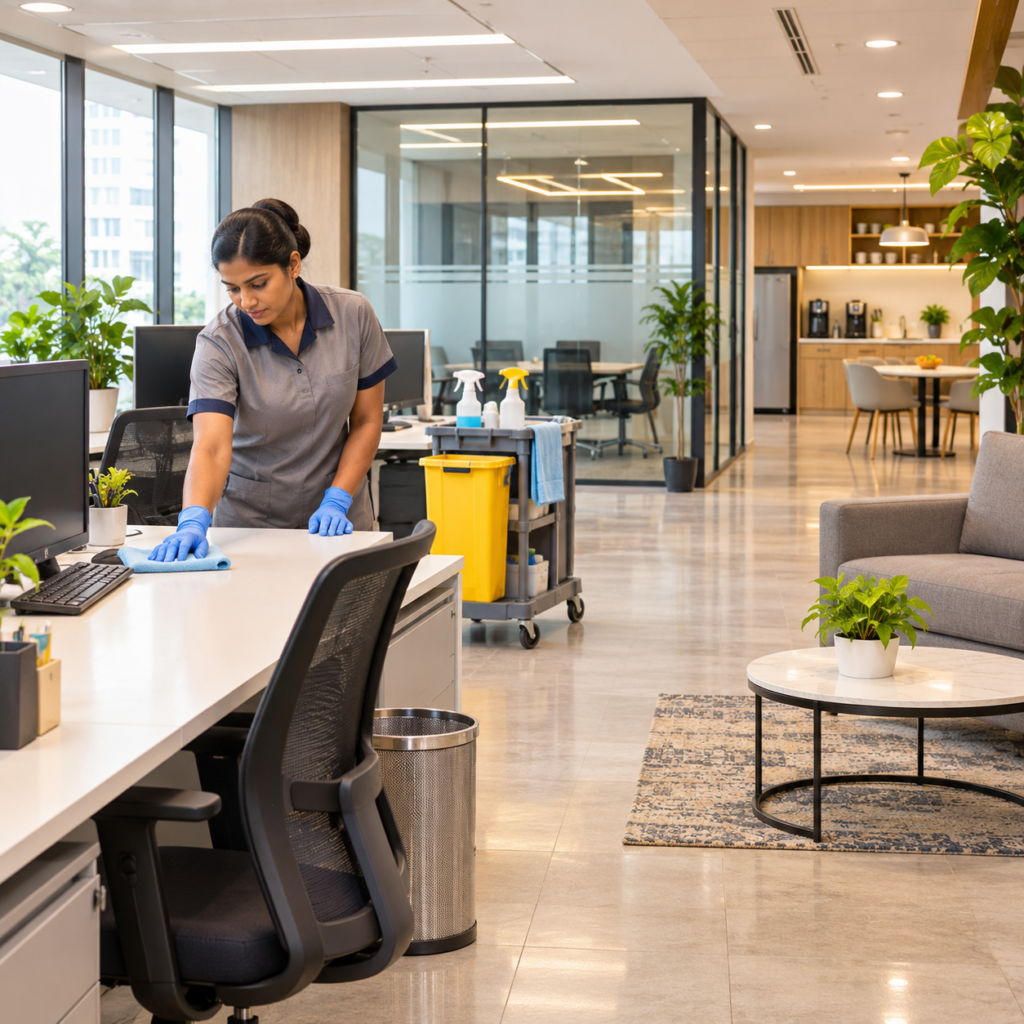
A clean and organised workplace creates a positive impression on employees, clients and visitors. From reception areas and workstations to washrooms and pantry spaces, every section of an office requires regular attention. Without a proper cleaning schedule, dust, waste, stains and dirt can accumulate, affecting workplace hygiene and the overall appearance of the premises.
Maintaining cleanliness does not necessarily require deep cleaning every day. A well-planned office housekeeping checklist helps businesses divide cleaning responsibilities into daily, weekly and monthly activities. It also ensures that important areas are not overlooked.
In this guide, we will explore a practical office housekeeping checklist to help maintain a hygienic, comfortable and organised working environment.
Why Is Office Housekeeping Important?
Office housekeeping involves more than simply sweeping floors and emptying dustbins. It includes maintaining workstations, cleaning common areas, managing waste, sanitising frequently touched surfaces and keeping washrooms in good condition.
Here are some important benefits:
- Better workplace hygiene: Regular cleaning helps reduce accumulated dust, dirt and surface contamination.
- Improved employee comfort: A neat workplace creates a more comfortable environment for employees.
- Positive business impression: Clean reception areas, meeting rooms and workstations help create a professional appearance.
- Better maintenance: Regular cleaning helps identify stains, leaks, damaged fixtures and other maintenance issues before they become bigger problems.
- Organised workspaces: Proper waste management and organised storage make everyday office activities easier.
Daily Office Housekeeping Checklist
Daily housekeeping focuses on areas that experience frequent use throughout the working day. These activities help maintain basic cleanliness and prevent dirt and waste from accumulating.
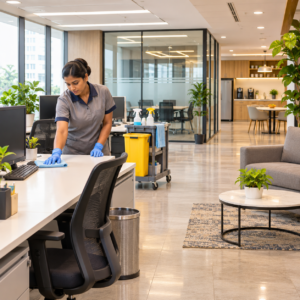
1. Clean and Organise Workstations
Workstations should be cleaned regularly because employees spend a significant part of their day at their desks.
Daily tasks include:
- Dusting accessible desk surfaces and shelves.
- Removing visible dust and food crumbs.
- Emptying individual waste bins.
- Cleaning shared tables and work surfaces.
- Keeping chairs and surrounding areas organised.
Electronic equipment such as keyboards, monitors and telephones should be cleaned using manufacturer-approved methods and suitable materials.
2. Maintain Reception and Entrance Areas
The reception area is often the first place visitors notice when entering an office.
Daily cleaning activities should include sweeping and mopping entrance floors, cleaning reception desks, removing fingerprints from accessible glass surfaces, emptying waste bins and keeping visitor seating arrangements neat.
Entrance mats should also be checked because they collect dust and dirt brought in from outside.
3. Clean Washrooms and Restrooms
Washrooms require particular attention because they are used frequently by employees and visitors.
Daily housekeeping tasks include:
- Cleaning and disinfecting toilets and washbasins.
- Wiping mirrors, taps and countertops.
- Mopping floors.
- Emptying sanitary and general waste bins safely.
- Refilling handwash, toilet paper and paper towels.
- Checking for unpleasant odours or plumbing issues.
High-traffic washrooms may require additional cleaning rounds during the day.
4. Clean Pantry and Kitchen Areas
Office pantries can quickly become untidy because employees regularly use shared appliances and food preparation areas.
Daily activities should include cleaning countertops, sinks and dining tables, removing food waste, washing used crockery, wiping appliance exteriors and checking refrigerator cleanliness.
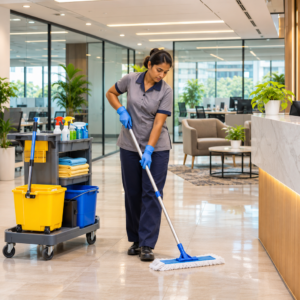
5. Sweep, Vacuum and Mop Floors
Dust and dirt can accumulate quickly in office corridors, meeting rooms and workstations.
Depending on the flooring material, daily housekeeping should include sweeping or vacuuming floors, mopping hard surfaces, cleaning visible spills and checking corners and high-traffic areas.
Wet-floor warning signs should be used whenever necessary to prevent slipping accidents.
6. Empty Dustbins and Manage Waste
All office waste bins should be checked and emptied according to the waste collection schedule. Replace liners when needed and separate recyclable materials wherever the office follows waste segregation practices.
7. Clean Commonly Touched Surfaces
Frequently touched surfaces such as door handles, lift buttons, handrails, light switches and shared equipment should receive appropriate cleaning at a suitable frequency.
This helps maintain cleanliness in areas used by multiple employees and visitors.
Weekly Office Housekeeping Checklist
Weekly cleaning focuses on areas that may not require attention every day but gradually accumulate dust and dirt.
A weekly checklist can include:
1. Deep Cleaning of Furniture
Dust and clean office chairs, cabinets, storage shelves, sofas and meeting room furniture. Pay attention to corners, edges and areas that are difficult to reach during daily cleaning.
2. Cleaning Glass Partitions and Windows
Clean interior glass partitions, office doors and accessible window surfaces to remove fingerprints, dust and visible stains.
3. Cleaning Pantry Appliances
Clean refrigerator shelves, microwave interiors, kitchen cabinets and other shared pantry equipment according to their cleaning instructions.
Remove expired or abandoned food items following the office’s agreed policy.
4. Detailed Washroom Cleaning
In addition to daily cleaning, pay attention to tiles, wall corners, taps, washbasins, drains and other areas where soap residue and water stains may accumulate.
5. Cleaning Under Furniture
Vacuum or sweep underneath desks, chairs, cabinets and other movable furniture where dust and paper particles can collect.
6. Checking Cleaning Supplies
Review the availability of cleaning products, garbage bags, handwash, tissues and other housekeeping materials. Replenish supplies as required.
Monthly Office Housekeeping Checklist
Monthly housekeeping focuses on deeper cleaning and maintenance activities that require additional time, equipment or planning.
Consider including these tasks:
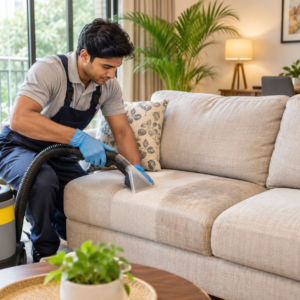
- Carpet and upholstery cleaning: Arrange suitable deep cleaning or vacuuming for carpets, office chairs and upholstered furniture.
- High-level dusting: Clean accessible ceiling corners, air vents, light fittings and other elevated surfaces using appropriate equipment.
- Deep floor cleaning: Schedule machine scrubbing or suitable floor treatment depending on the surface material and condition.
- Storage area cleaning: Organise storerooms, remove unnecessary materials and clean shelves and storage cabinets.
- Behind-appliance cleaning: Clean accessible spaces behind refrigerators, cabinets and other movable equipment.
- Housekeeping inspection: Review cleaning records, identify recurring problems and update the cleaning schedule where necessary.
Some tasks, such as carpet extraction and high-level cleaning, may need to be scheduled less frequently depending on the building and its usage.
How to Maintain an Effective Office Housekeeping Schedule
Creating a checklist is only the first step. Businesses should also establish a system to ensure that cleaning activities are completed consistently.
Here are some useful practices:
- Assign responsibilities: Clearly identify which cleaning tasks are handled by housekeeping staff and which require maintenance personnel.
- Maintain cleaning records: Use daily, weekly and monthly checklists with completion dates and staff sign-offs.
- Use suitable cleaning materials: Select cleaning solutions and equipment according to the surface and manufacturer’s instructions.
- Prioritise high-traffic areas: Reception areas, washrooms, pantries and common spaces may need more frequent attention.
- Follow safety procedures: Ensure cleaning staff use appropriate protective equipment, follow product labels and avoid mixing cleaning chemicals.
- Conduct regular inspections: Supervisors should review completed tasks and identify areas that require additional attention.
The cleaning schedule should be adjusted according to office size, employee strength, building layout and daily foot traffic.
When Should Businesses Hire Professional Office Housekeeping Services?
Managing office cleaning internally can become challenging, particularly for organisations with large workspaces, multiple floors or high employee footfall.
Professional housekeeping support can help businesses maintain a more structured cleaning schedule. It can also reduce the administrative burden of managing cleaning staff, equipment and routine tasks.
Before selecting a housekeeping provider, consider its service scope, cleaning schedule, staff arrangements, equipment, safety practices and pricing.
Maintain a Hygienic Workplace with Sera Facility Management
A clean office supports a comfortable and professional working environment. Following a daily, weekly and monthly housekeeping checklist helps businesses maintain cleanliness while ensuring that important areas receive proper attention.
Sera Facility Management provides housekeeping services in Kolkata for homes, offices and commercial spaces. The company also lists commercial housekeeping and contract cleaning services for businesses.
Whether you need regular office cleaning or support with maintaining your commercial premises, explore Sera Facility Management’s commercial housekeeping services to learn more and enquire about a suitable cleaning arrangement.