






How to Get Rid of Mosquitoes Inside the House Naturally
Mosquitoes inside your home can quickly turn a comfortable evening into an irritating experience. Beyond the itching and discomfort caused by bites, mosquitoes can create concerns because some species can transmit diseases. If you are wondering how to get rid of mosquitoes inside the house, the most effective approach is not simply killing the mosquitoes you can see. You also need to remove potential breeding sources, block entry points and make indoor spaces less attractive to them.
Natural prevention methods can be useful for everyday protection, especially when combined with good household hygiene and practical mosquito-control habits.
Why Do Mosquitoes Enter the House?
Mosquitoes can enter through open doors, windows, damaged screens and other small openings. Once indoors, they tend to remain in cool, shaded and relatively quiet areas.
Common reasons for mosquito activity inside a home include:
- Standing water in or around the property
- Open windows and doors
- Damaged or missing window screens
- Water stored in uncovered containers
- Damp corners and poorly ventilated spaces
- Plants or containers that retain water
- Nearby gardens, drains or construction areas
In apartment buildings, the problem can sometimes be more complicated because shared spaces, landscaping, water storage and drainage systems may contribute to mosquito activity. Newtown’s high-rise residences, for example, can face mosquito issues associated with rooftop tanks, landscaped areas and water accumulation around construction zones.
How to Get Rid of Mosquitoes Inside the House Naturally
If you want to know how to get rid of mosquitoes inside the house, start with simple measures that address both existing mosquitoes and the conditions that attract them.
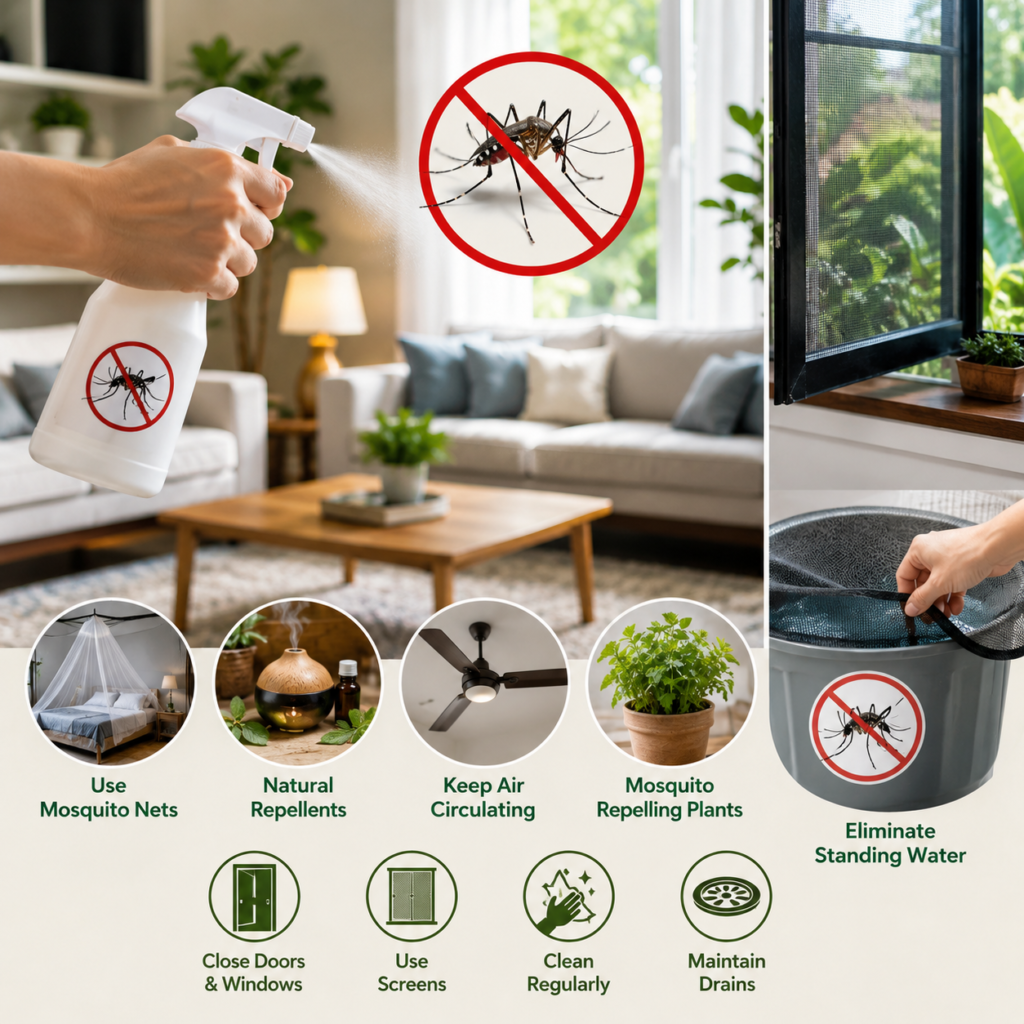
1. Remove Standing Water
One of the most important steps is eliminating stagnant water. Mosquitoes can breed in surprisingly small amounts of water.
Check regularly for water collected in:
- Flowerpot saucers
- Buckets and containers
- Plant trays
- Unused bottles
- Pet-water containers
- Roof or balcony areas
- Drains and other water-holding spots
Empty, clean and cover containers wherever possible. Regularly inspecting these areas can significantly reduce potential breeding locations.
2. Install or Repair Window Screens
A physical barrier is one of the simplest forms of an indoor mosquito deterrent. Make sure windows and ventilation openings have properly fitted screens.
Check for:
- Small tears
- Loose edges
- Gaps around frames
- Damaged mesh
- Open ventilation points
Even a small opening can allow mosquitoes to enter.
3. Use Fans to Improve Air Movement
Mosquitoes are relatively weak fliers, so increased air movement can make it harder for them to approach people. Using a ceiling or standing fan in frequently occupied rooms can therefore be a practical addition to your indoor mosquito-control routine.
Fans should not be considered a complete solution, but they can complement other preventive measures.
4. Try a Mosquito Repellent Home Remedy Carefully
A mosquito repellent home remedy can be part of a broader prevention routine. Some households use plant-based ingredients such as citronella, lemongrass, neem or eucalyptus because of their traditional association with mosquito deterrence.
However, natural does not automatically mean highly effective or suitable for everyone. The duration and effectiveness of botanical repellents can vary considerably depending on the formulation. Current market research also shows increasing consumer interest in natural mosquito-repellent formulations.
If using essential oils, avoid applying concentrated oils directly to the skin unless the product is specifically formulated and labeled for that purpose. Keep oils and homemade preparations away from children and pets unless their safety has been established.
What Is the Best Way to Get Rid of Mosquitoes?
The best way to get rid of mosquitoes is to combine several preventive measures instead of depending on one remedy.
A practical indoor strategy includes:
- Remove stagnant water
- Keep doors and windows closed when appropriate
- Repair damaged screens
- Keep rooms well ventilated
- Reduce clutter where mosquitoes can hide
- Use suitable mosquito-control products according to their labels
- Inspect balconies, terraces and nearby outdoor areas
- Address recurring breeding sources
This approach is more sustainable because it focuses on reducing the conditions that allow mosquitoes to repeatedly enter or reproduce.
Natural Indoor Mosquito Deterrent Ideas
An indoor mosquito deterrent should ideally be part of a wider prevention strategy. Depending on your household needs, you can consider:
- Window and door screens
- Fans and improved ventilation
- Properly maintained drains
- Mosquito nets while sleeping
- Appropriate plant-based repellents
- Regular removal of stagnant water
- Keeping doors closed when mosquitoes are most active
Some natural repellents may offer shorter-lasting protection than established synthetic formulations. Mordor Intelligence reports that natural mosquito-repellent products are gaining consumer interest, while also noting that botanical ingredients can have shorter protection durations depending on the formulation.
Natural mosquito-control options have also become increasingly popular as consumers look for different ways to protect their homes. From plant-based formulations to sprays, vaporizers and other products, there are now many options available for different household needs. The growing mosquito repellent market reflects this wider interest in mosquito-control solutions.
How to Stop Mosquitoes From Coming Back
Knowing how to get rid of mosquitoes inside the house is only half the solution. Prevention is what helps reduce repeated mosquito activity.
Create a weekly mosquito-control routine:
Inspect Indoor Areas
Look behind furniture, around bathrooms, near sinks and in other cool or less-disturbed areas.
Check Outdoor Spaces
Inspect balconies, terraces, gardens and containers around the property for accumulated water.
Keep Water Containers Covered
Any stored water should be properly covered to reduce opportunities for mosquitoes to access it.
Maintain Drains and Gutters
Blocked or poorly maintained drainage areas can retain water and create favorable breeding conditions.
Keep Screens in Good Condition
Repair holes immediately rather than waiting until mosquito activity becomes severe.
When Natural Methods Are Not Enough
Home remedies can help with prevention, but persistent mosquito activity may indicate an underlying breeding source that has not been identified.
This can be particularly relevant in apartment complexes. Shared plumbing, drainage, landscaping, water storage areas and interconnected building infrastructure can make pest problems harder to isolate to one apartment.
If mosquitoes continue appearing despite consistent preventive efforts, professional inspection can help identify potential breeding and entry points.
Residents dealing with recurring pest concerns can also explore a professional pest control service in Newtown for a more targeted assessment. A professional service can inspect the property, identify contributing factors and recommend appropriate preventive measures.
Home remedies can help with prevention, but persistent mosquito activity may indicate an underlying breeding source that has not been identified. This can be particularly challenging in apartment complexes, where shared plumbing, drainage, landscaping, water storage areas and other common spaces can contribute to pest problems. Understanding these high-rise apartment pest problems in Newtown can help residents identify potential risk areas and take preventive action before mosquito activity becomes a recurring issue.
Choosing the Right Mosquito Control Approach
When choosing mosquito-control products or services, consider more than immediate results. Look at the source of the infestation, how frequently mosquitoes appear, the size of the affected area and the needs of people living in the home.
A good strategy should focus on:
- Source reduction
- Entry-point prevention
- Appropriate repellents
- Regular monitoring
- Safe application practices
- Professional intervention when necessary
The mosquito-repellent industry is also evolving, with sprays, vaporizers, coils, wearables and other formats available for different use cases.
Learning how to get rid of mosquitoes inside the house starts with identifying why they are getting inside and where they may be breeding nearby. Removing standing water, repairing screens, improving airflow and using suitable repellents can make your home less attractive to mosquitoes.
A mosquito repellent home remedy may provide an additional layer of protection, but it should not replace source reduction and sensible prevention. If the problem continues despite these efforts, professional assessment may be the best way to get rid of mosquitoes and address the underlying cause.
By combining natural prevention, physical barriers and professional support when necessary, homeowners and apartment residents can create a more comfortable and mosquito-conscious living environment.
FAQs
What is the fastest way to get rid of mosquitoes inside the house?
Remove standing water, close potential entry points, repair window screens and use an appropriate indoor mosquito-control product according to its label. Fans and mosquito nets can provide additional protection.
What is the best natural mosquito repellent for the home?
Plant-based ingredients such as citronella, neem, lemongrass and eucalyptus are commonly used in natural mosquito-repellent products. Their effectiveness and duration can vary depending on the formulation.
Does a mosquito repellent home remedy really work?
Some natural ingredients may help deter mosquitoes, but their effectiveness can vary. For persistent mosquito activity, combine repellents with source reduction and physical barriers.
What is an effective indoor mosquito deterrent?
Window screens, mosquito nets, fans, appropriate repellents and eliminating standing water can all contribute to an effective indoor mosquito deterrent strategy.
Why do mosquitoes keep coming back after treatment?
Repeated mosquito activity may mean that a nearby breeding source remains. Check stagnant water, drains, balconies, gardens, rooftop areas and other places where water can accumulate.
Should I contact Pest Control Service In Newtown for mosquitoes?
If mosquito activity remains persistent despite regular prevention, professional inspection can help identify hidden breeding sources and recommend a suitable control strategy.
Are natural mosquito repellents safer?
“Natural” does not automatically mean risk-free. Essential oils and other concentrated ingredients can cause irritation or other reactions, so always follow the product’s directions and use appropriate precautions.